
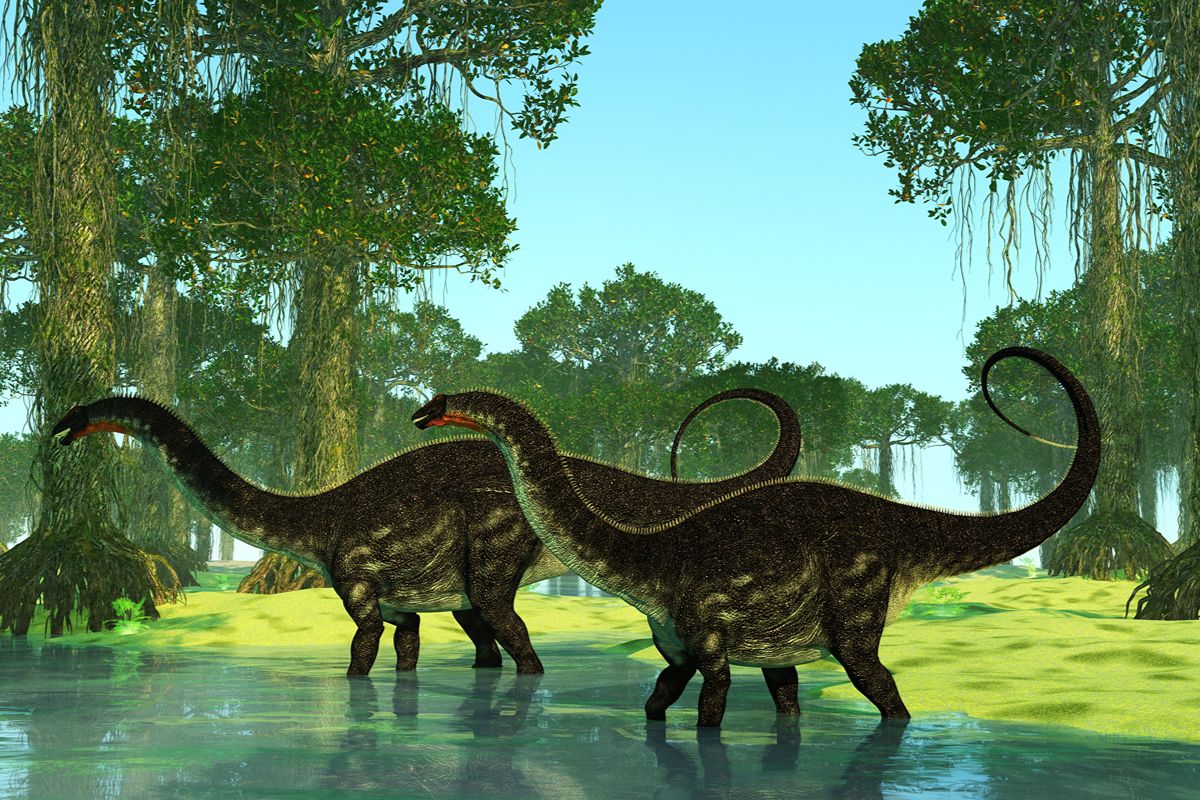
Dinosaur fossils have been found on all continents on Earth. As such, I have hand-picked 54 long-neck dinosaur names with pictures included.
List of 54 Long-Neck Dinosaurs:
Omeisaurus
It was a long-necked dinosaur that lived during the Late Jurassic period. The initial discovery of Omeisaurus was in 1936. Omeisaurus was discovered in China’s Sichuan Province and its neck length reached up to 9 meters.
Brachiosaurus
Brachiosaurus was named by American paleontologist Elmer Riggs in 1903. The Brachiosaurus’ neck was close to 9 meters.
Saltasaurus
Saltasaurus (Greek for “Salta lizard”) is one of the last sauropods, and was about 40 feet long. Its neck measured north of 2 meters and had bony armor plates (osteoderms). It roamed what is now known as Argentina in South America.
Sauroposeidon
It combines the Greek word for lizard with Poseidon who was the sea god of the Greeks. It was reconstructed from four neck bones found in Oklahoma.
Jobaria
Paul Sereno kept the local name when his team dug up a skeleton in 1997 that was over 95 percent complete.
Apatosaurus
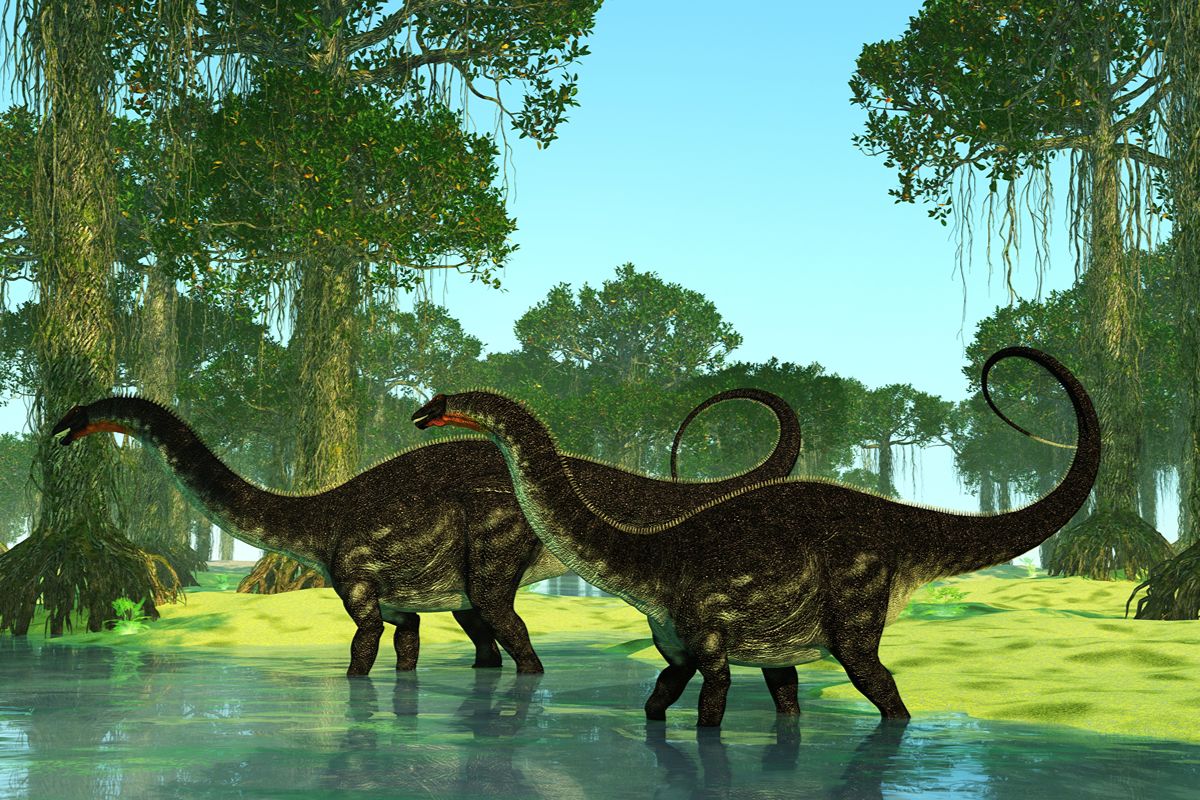
It is named for the Greek words meaning “deceptive lizard.” Apatosaurus lived during the late Jurassic Period and weighed as much as 41 tonnes. The neck measured around 6 meters long. Apatosaurus was discovered by paleontologist Earl Douglass in 1909.
Futalognkosaurus
Futalognkosaurus is a gigantic sauropod that was originally estimated at 32 to 34 metres in length. Its name comes from the Mapuche language.
Diplodocus

With a total length of 24 to 26 meters, Diplodocus name means “double beam.” Diplodocus was a very large animal. Its neck measured up to 6m.
Dreadnoughtus
Dreadnoughtus was a herbivore and a member of the group called titanosaurs. Dreadnoughtus was about 85 feet long and had a massive neck of 37 feet long.
Europasaurus
Adults stopped growing at 6 m due to the facts that their ancestors got stranded on a Jurassic island in what is now Germany.
Xinjiangtitan
All 18 neck vertebrae were preserved in a row in Xinjiang in northwest China, and reached close to 15 m.
Bajadasaurus
A Patagonian plant-eater whose name is linked to the Bajada Colorada rock where it surfaced.
Brontosaurus
Brontosaurus was a large herbivorous sauropod dinosaur that could have weighed 24 US tons. It is one of the biggest lizards. The neck was 30 feet long.
Notocolossus
Notocolossus was a herbivore that lived in the Cretaceous period. It had a neck length of 12 m.
Camarasaurus

Camarasaurus had in length between 50 and 65 feet, and was named by Edward Drinker Cope in 1877.
Rapetosaurus: 3.36 meters
Rapetosaurus fossils come from Madagascar,
Editor’s Pick: Names of Dragons from Game of Thrones
Argentinosaurus: 30 to 49 feet (9 to 14.9m)

Argentinosaurus was one of the largest known land animals of all time, possibly weighing 65 to 75 tonnes and reaching 100 feet long. It was described in 1993 by Bonaparte and Coria.
Patagotitan
Patagotitan is a titanosaur, a type of sauropod. Measuring some 35 metres from nose to tail, Patagotitan is the largest known animal to ever stomp the earth. The neck was close to 12m long, and the femur was almost 2.5 metres long. It was found at La Flecha Ranch in 2010 in Patagonia.
Shunosaurus
The tail ended in a bony club tipped with 2 short spikes. “Shu” is a term for China’s Sichuan province from where students first turned up its bones in 1977.
Ampelosaurus
Its skin held rows of bony plates.
Turiasaurus
Turiasaurus was a herbivore and the largest dinosaur ever found in Europe.
Giraffatitan: 8.5 meters

Giraffatitan is known from the fossils of several individuals, and fossil specimens have been found in Tanzania.
Amargasaurus: 7.9 feet
The only known skeleton of Amargasaurus was discovered in 1984. Reaching 9 to 10 m long (30 to 33 ft), Amargasaurus was small for a sauropod.
Vulcanodon
The name is made of the Roman god of fire and the Greek for tooth and it means “volcano tooth.” It came out of a small island in Zimbabwe’s Lake Kariba.
Australotitan
The “southern titan” was quarried from a family farm in the Eromanga Basin of Queensland and stretched between 25 and 30 m. Formal description took 15 years after the first bone came up.
Antarctosaurus
This South American colossus was christened by Friedrich von Huene in 1929.
Supersaurus

Supersaurus was a sauropod of the late Jurassic period. Its neck reached 15m. One specimen has been nicknamed “Jimbo.”
Barosaurus: 28 to 49 feet
Barosaurus was a long-necked, plant-eating dinosaur with some adults measuring 89 ft in length. Barosaurus is a member of the sauropod family Diplodocidae.
Seismosaurus
At 33 m (110 ft, Seismosaurus weighed about as much as 8 African elephants. It is now treated as a species of Diplodocus (Diplodocus hallorum).
Nemegtosaurus
It was named after the Nemegt Basin in the Gobi Desert and was known from a single skull.
Opisthocoelicaudia
The jaw-breaking name (it is pronounced as oh-PISS-tho-see-lih-KOW-dee-uh) is linked to the hollowed sockets in its tail bones. I dare you to say it three times fast.
Malawisaurus

It is an extinct genus of titanosaurian sauropod dinosaur from the Late Cretaceous period.
Quaesitosaurus
It uses a Latin word for “uncommon.”
Mendozasaurus
Bernardo González Riga described it in 2003 and the name is after Mendoza Province in Argentina.
Mamenchisaurus

Mamenchisaurus was first discovered in 1952 and is known for its long neck. As such it may have been better called “Neckosaurus.”
Nigersaurus
Nigersaurus was about 9 TO 14.1 m long and had a long neck. Nigersaurus lived in the Cretaceous period and inhabited Africa.
Tastavinsaurus
Tastavinsaurus belonged to the Titanosauriformes and was a herbivore that lived in the Cretaceous period.
Neuquensaurus
It is named from the Neuquén country of Patagonia and wore a coat of bony studs set into its skin.
Titanosaurus

Titanosaurus was first described by Richard Lydekker in 1877. Its the animal that gives the entire titanosaur group its name.
Magyarosaurus
Measuring less than 3 m long, Magyarosaurus is one of the smallest-known adult sauropods. It lived in today’s Romania.
Wintonotitan
It has the name of Winton that is a town in Queensland.
Savannasaurus
The “savanna lizard” (field nickname Wade) came out of that same Winton country and was described in 2016.
Tornieria
Its bones came from the rich Tendaguru beds of Tanzania.
Alamosaurus: neck length 5 meters

Alamosaurus weighed up to 35 tonnes and had a length of around 26 metres.
Haplocanthosaurus
Haplocanthosaurus was a genus of sauropod dinosaur and is one of the more primitive sauropods of the Morrison Formation.
Rebbachisaurus
Rebbachisaurus is named from a Berber community of southeastern Morocco.
Puertasaurus

Puertasaurus lived in South America during the Late Cretaceous Period. Puertasaurus was named after fossil hunter Pablo Puerta.
Muyelensaurus
Muyelensaurus inhabited South America and lived in the Cretaceous period.
READ MORE: Names Of The Penguins From Madagascar & Happy Feet
Paralititan
Its name means “tidal giant.” Paralititan lived in present-day Egypt during the Late Cretaceous period. Paralititan means “tidal giant.”
Isanosaurus
Isanosaurus is named for the Isan region of northeast Thailand and dates to the Late Triassic.
Cetiosaurus

Cetiosaurus is the first sauropod discovered.
Xenoposeidon
“Strange Poseidon” is built from a single backbone collected near Hastings, England, in the 1890s.
Dongbeititan
Dongbei is the Chinese word for the northeast.
Related articles

Dark Elven City Name Generator With Meanings & Free

Funny Pirate Name Generator (Ship, Crew, Kids, Adults)

Viking Names Generator (Male, Female, Town, Village, Clan)

75 Cute & Funny Capybara Names With Meaning

Spiritual Names For Girl & Boys With Meanings
