

I have selected 250 cute and funny capybara names with meanings included.
List Of Funny & Cute Capybara Names And Their Meanings:
Llanos
Spanish for “plains”, Llanos is tropical grassland in northern South America.
Pirarucu
Pirarucu is symbolizing ”red fish.”
Maru
“Round.” Maru is a Scottish Fold cat famous for squeezing into boxes.
Caju
From Tupi acaju, “cashew.”
Nyx
Greek for night, Nyx is the goddess who mothered Hypnos. Her relatives are on my list of monikers that mean darkness and night.
Paçoca
Paçoca is a typical Brazilian dish.
Tempura
From Portuguese tempero, “seasoning.”
Dolce Far Niente
“Sweet doing nothing.”
Brigadeiro
Portuguese for ”brigadier”. The chocolate ball is connected to Brigadier Eduardo Gomes, whose supporters sold the chocolate sweets to fund his 1945 presidential run.
Baramundi
Drop one r from barramundi, a saltwater fish of the Indian and western Pacific oceans.
Wasabi
“Mountain hollyhock.”
Ocelot
From Nahuatl ocelotl, “jaguar.”
Tapas
“Lids,” “covers,” “heat” and “self-discipline.”
Ramune
From English “lemonade.”
Biscoito
“Twice cooked.”
Florence
“Flourishing”. Nightingale has origins in her birth city.
Pipoca
Popcorn in Brazil, from Tupi pi’poka, “skin that bursts.”
Beatrice
Beatrice (“she who brings joy”) guides Dante through Paradise.
Basil
Royal.
Guaraná
Guaraná comes from warana, a mystical plant from the Amazonian forest.
Bara Streisand
A pun on Barbra Streisand, whose first name respells Barbara, from Greek barbaros, ”foreign.”
Count Capula
Count Capula combines capybara with Dracula, which Romanian spells Drăculea, “son of the dragon.” For more names with fangs, run the dark fantasy character generator.
Capiche
Italian-American slang for “got it?”.
Caplin
Caplin is the Newfoundland spelling of capelin, that is a small forage fish of the smelt family.
Caprese
Caprese is Italian for ”from Capri”. It is also from the Greek kapros (”boar”) or Latin caprae (”goats”).
Capsicum
Greek word kapto “to bite.”
Capulet
Capulet (“little headstrong one”) and is composed of the Italian capo (“head”) and a suffix that means “little.”
Gnawbert
Gnawbert is made of the English verb “gnaw” (”to chew persistently”) and the Germanic suffix “-bert” (bright”).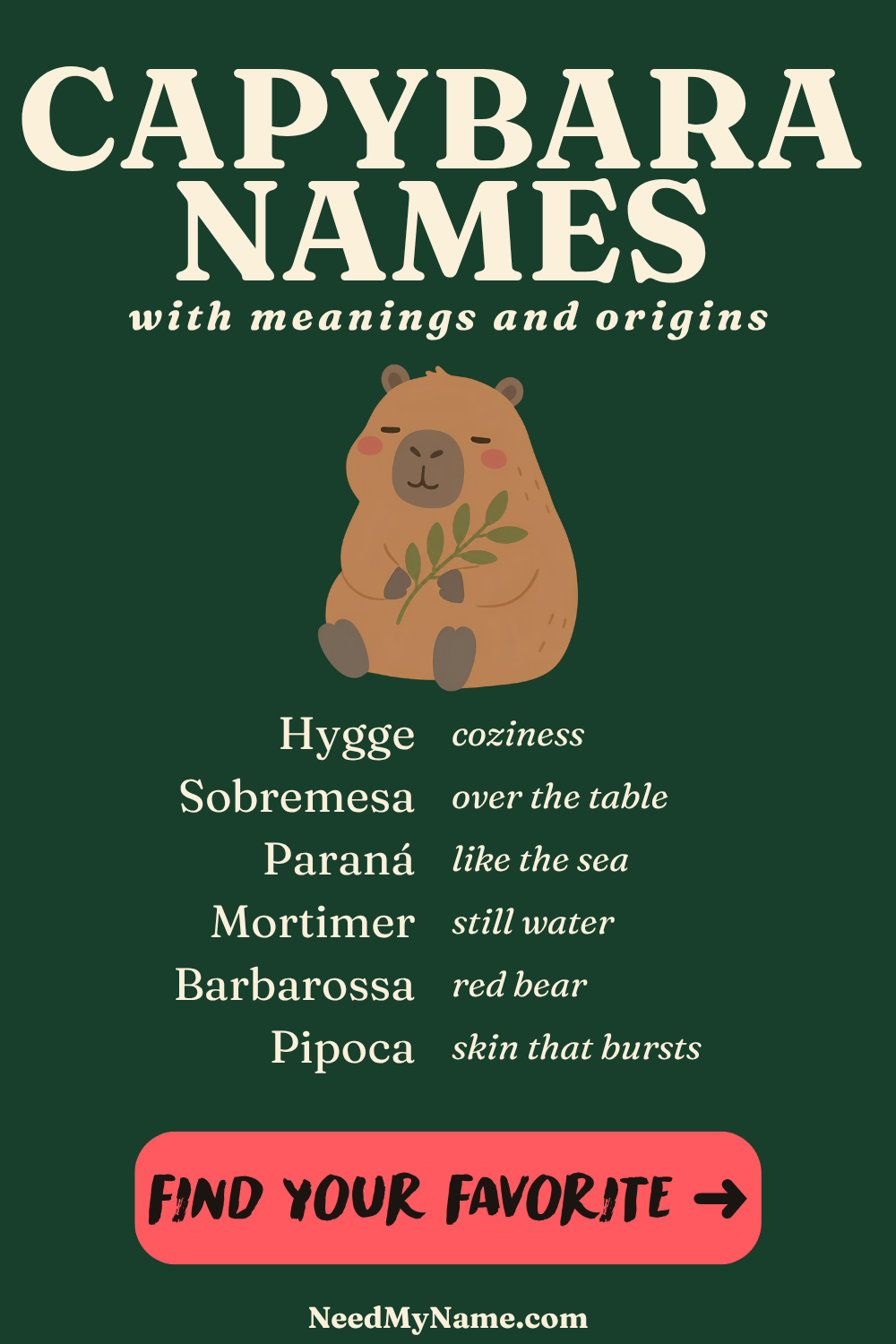
Sobremesa
“Over the table,” sobremesa is the Spanish tradition of relaxing at the table after a meal.
Pitanga
Pitanga is Tupi for “red.”
Macchiato
“Stained.”
Earl Grey
Earl comes from Old English eorl, nobleman. The bergamot tea has the title of Charles Grey, 2nd Earl Grey. He was the British prime minister from 1830 to 1834.
Yuru
“Loose and relaxed.”
Avocado
From Nahuatl ahuacatl, “testicle.”
Duvet
“Fine feathers.”
Hygge
Hygge is the Danish word for coziness, from Old Norse hugga, “to comfort”.
Mañana
Mañana is in Spanish “tomorrow” and ”morning.”
Senator Snoozington
Senator is comprised of the Latin root senex (“old man”) and Snoozington has a mock-aristocratic -ington added to snooze.
Mr. Unbothered
”Not feeling or showing worry.”
Lawnmower
English lawn and mower, and I believe the title is perfect for an adult capybara that grazes about 3 kilos of grass a day.
Kinako
Toasted soybean flour in Japan, kinako, ”yellow powder”.
Guru
Guru is Sanskrit for ”heavy” or weighty and is one of the spiritual ones.
Iberá
“Shining water,” and Argentine wetlands full of capybaras.
Myrtle
Myrtle (“evergreen shrub”) haunts a bathroom at Hogwarts.
Hanabi
“Fire flower.”
Toast
From Latin tostus, “roasted.”
Cafuné
It comes from Kimbundu, a language of Angola. Pronounced kah-foo-NEH. Running fingers through someone’s hair.
Pesto
“Pounded.”
Alfred
“Elf counsel,” as well as a king who let a peasant woman’s cakes burn.
Lettuce
From Latin lac, “milk,” for its milky sap.
Hojicha
Hojicha has hōji (”to roast”) and cha (”browned tea leaves”).
Hortense
Hortense de Beauharnais was the Queen of Holland. It is the French form of the Roman Hortensius and is symbolizing ”garden.”
Footstool
Footstool has origins in the Old English words, fōt and stōl, ”seat”.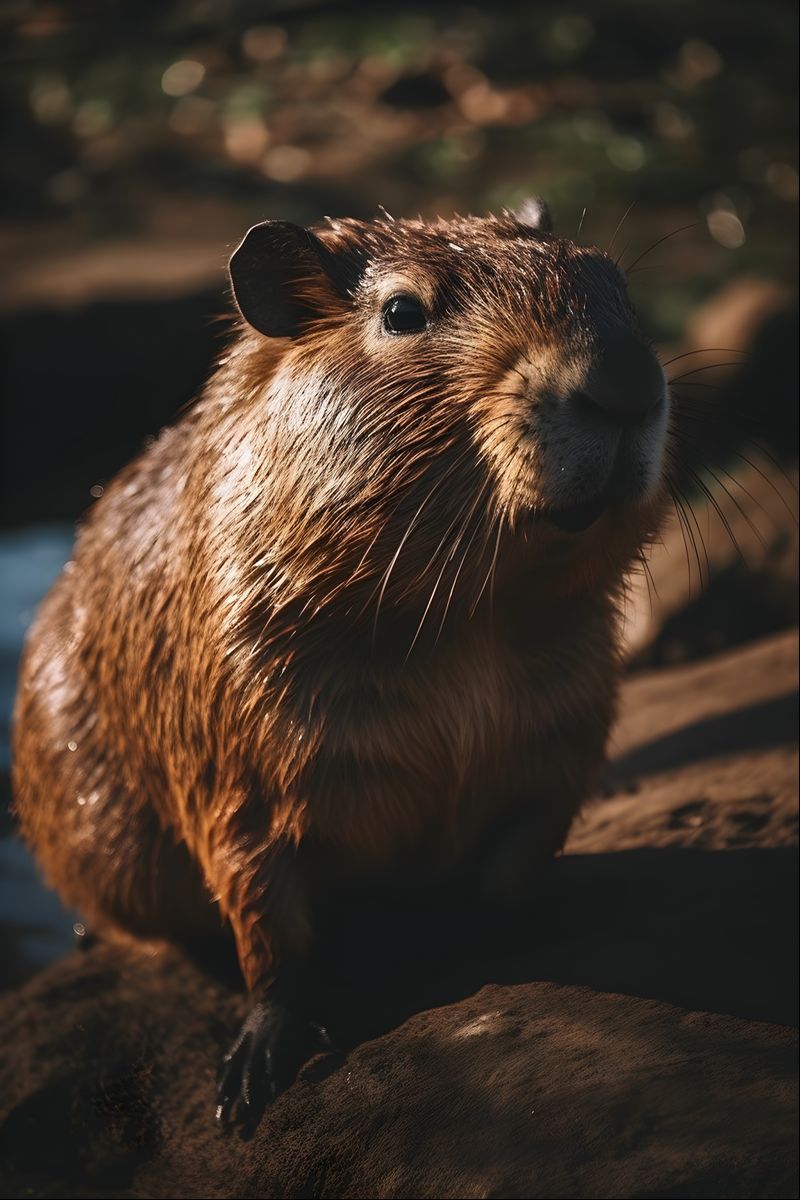
Dango
”Hana yori dango” or “dumplings over flowers” is a way to tell someone to choose substance over style.
Fergus
“Man of vigor.”
Wallow
From Old English wealwian, “to roll.”
Pantufla
Slipper.
Bento
“Convenient,” or “blessed” as a Portuguese name.
Xodó
“Darling.”
Otis
“Wealth,” as well as an inventor of safety elevators.
Maharaja
“Great king.”
Ambrose
“Immortal.” Ambrose of Milan is a patron saint of beekeepers.
Cariño
“Affection.”
Sento
It combines sen, “coin,” and tō, “hot water.”
Lloyd
“Grey.”
Pura Vida
“Pure life,” and Costa Rica’s everyday greeting.
Zen
From Sanskrit dhyāna, “meditation.”
Onsen
“Hot spring.” Onsen is a winter capybara ritual at Izu Shaboten Zoo.
Anko
Sweet azuki bean paste.
Satsuma
Satsuma Province is now the western half of Kagoshima Prefecture.
Tocantins
“Toucan’s beak.”
Kaki
“Persimmon” in Japanese and “foot” in Malay.
Professor Puddle
From Latin profiteri, “to declare in public.”
Chiquito
“Tiny one”.
Waffles
From Middle Dutch wafel, “honeycomb.”
Pamonha
“Sticky” in Tupi, and a slow, dull person in Brazilian slang.
Beijinho
“Little kiss.”
Ida
“Work,” “industrious,” “prosperous” and “happy.”
Cappuccino
“Little hood,” after robes of Capuchin friars.
Daifuku
“Great luck.”
Preguiça
“Laziness,” and a sloth.
Penelope
Penelope (“weaver”) undoes her weaving every night to stall suitors.
Dorado
“Golden.”
Mate
“Gourd” in Quechua and “friend” in English.
Kawaii
“Cute,” from a word for a flushed face.
Fofinho
Fofinho, “fluffy little one”.
Eugene
“Well born”.
Hammock
“Hanging bed,” from Taíno hamaca, a word in Columbus’s log.
Cannoli
Little tubes.
Onigiri
It comes from nigiru, “to grip.”
Hildegard
“Battle enclosure.” Hildegard was a nun who composed music in twelfth-century Germany.
Zucchini
“Little squash.”
Timothy
Greek Timotheos, “honoring God,” from ”timē” and ”theos”. Timothy the tortoise was a Royal Navy mascot in the Crimean War.
Pororoca
“Great roar,” a tidal bore that surfers ride up Amazon rivers.
Nutmeg
“Musky nut.”
Alfalfa
”The best sort of fodder”. British and as lucerne in Australia.
Lord Nibbles
Lord comes from Old English hlāfweard, “loaf guardian.”
Jeitinho
“Little way.”
Lebowski
The Dude in The Big Lebowski is after film producer Jeff Dowd. It means “one from Łebowo”.
Pumpkin
From Greek pepon, “ripe.”
Blanket
From Old French blanc, “white,” for undyed wool.
Madeira
“Wood.”
Chillbert
William Gilbert was the physician to Queen Elizabeth and used the Latin electricus in 1600.
Baracuda
A person who is aggressive.
Mortimer
Mortimer comes from Mortemer, “dead sea” or ”still water.” Nicknames include Mort and Morty.
Bartholomew
From Aramaic bar Talmai, “son of furrows.”
Piranha
“Tooth fish,” and I love it on a rodent that lives on grass.
Empanada
“Wrapped in bread.”
Sabiá
“One who prays a lot,” and Brazil’s national bird.
Chancla
“Flip-flop.”
Stanley
“Stony clearing.” It is also a hockey cup after Lord Stanley.
Focaccia
From Latin focus, “hearth.”
Ernest
Ernest (“serious”) is a fake one in an Oscar Wilde comedy.
Gertrude
Saint Gertrude of Nivelles is the patron of cats and her feast is on March 17. It is made of the Germanic ger (“spear”) and trud (”strength”).
Madame Munch
Madame is French for “my lady.”
Momo
“Peach,” or “hundred.”
Sultan
“Authority.”
Jabuticaba
“Tortoise food,” as well as berry that sprouts right on its tree trunk.
Mildred
Old English Mildþryð welds mild, ”gentle”, to þryð, might.
Jacuzzi
It has roots in the seven Italian brothers who were originally from Casarsa della Delizia in Italy.
Orinoco
“A place to paddle”.
Paraná
“Like the sea” in Tupi-Guarani and comes from pará, sea, and nã, similar.
Mochi
“Rice cake.”
Marshmallow
“Mallow of marshes,” a plant whose root once thickened this candy.
Peteca
“To slap.”
Sauna
“Bathhouse,” and Finland has about three million of them.
Winifred
From Welsh Gwenfrewi, “blessed reconciliation.”
Chigüire
“Capybara” in Venezuelan Spanish.
Taiyaki
“Baked sea bream”.
Agnes
“Pure,” and “lamb.”
Pantanal
From pântano, “swamp,” and home to dense capybara herds.
Quixote
Quixote is Old Spanish for “thigh armor.”
Brunhilda
“Armored battle maiden.”
Nacho
Nacho is short for Ignacio, “fiery,” and a chef who first made nachos.
Affogato
“Drowned.”
Grumbles
Grumble is derived from Middle Dutch grommen, ”to mutter.”
Delphine
Dolphin.
Prudence
“Foresight/caution.”
Leopold
Leopold (“brave people”) Bloom walks Dublin for one day in Ulysses.
Matcha
“Powdered tea.”
Siesta
Siesta is from the Latin sexta hora, the sixth hour after dawn, which was actually noon for the Romans.
Araguaia
“River of macaws.”
Potato
It comes from Taíno batata, sweet potato.
Gnocchi
Italian gnocchi comes from nocchio, a knot in wood, or nocca, knuckle.
Strudel
“Whirlpool.”
Percival
Percival (“pierce the valley”) is a Grail knight at King Arthur’s court.
Flojo
“Lazy/loose.”
Cabbage
From Old French caboche, “head.”
Coxinha
“Little thigh,” a snack shaped like a chicken drumstick.
Dandelion
“Lion’s tooth.”
Fudge
In 17th-century English, to fudge was to fake something.
Kumquat
“Golden orange”.
Ponzu
It has origins in Dutch pons, “punch.”
Açaí
Pronounced ah-sah-EE. “Fruit that cries.” A palm berry from flooded Amazon forests.
Barnaby
“Son of consolation.”
Hinata
“Sunny place,” or “facing the sun.”
Lagoon
Lagoon is from Italian laguna, which has origins in the Latin lacuna, “pool” or ”gap.”
Coconut
From Portuguese coco, “grinning face,” for three holes on its shell.
Tamale
From Nahuatl tamalli, “wrapped.”
Muriel
“Bright sea.”
Baron
Baron came into Old French from Frankish baro, freeman or fighter.
Tanuki
“Raccoon dog.”
Chinchilla
“Little Chincha,” after Chincha people of Peru.
Amazon
Amazones were a “race of female warriors in Scythia.” Jeff Bezos got the inspiration for its company after the river.
Namaste
The Sanskrit namaste is from namas, “bow,” and te, ”to you.”
Gus
Gus is the short form of Augustus, Latin for ”venerable,” or for Gustav and Angus.
Duke
Latin dux, “leader.”
Hippo
From the Greek hippopotamos, “river horse.”
Maracujá
“Food in a cuia” or “fruit that serves itself”.
Doug
“Dark stream.”
Humphrey
Germanic hun and frid, warrior and peace.
Churro
From Churra, a Spanish sheep with horns curled like this pastry.
Carioca
“White man’s house.”
Sasquatch
From Halkomelem sásq’ets, “wild man.”
Yuzu
“Citron”. Japanese families float yuzu in bathwater on winter solstice.
Mandioca
“Mani’s house,” from a Tupi legend of a girl who was buried under her hut.
Archibald
“Truly bold.”
Reginald
It is a Latinized form of Reginold, from ragin (”counsel”) and wald (”rule”).
Gordito
”Chubby one”.
Gary
From gar, ”spear”.
Kevin
Kevin has origins in the Irish Caoimhín (”kind birth” or ”handsome birth”).
Winston
Joy stone.
Yokan
“Sheep soup.” Yokan is a mutton broth in China as well as a bean jelly in Japan.
Tangerine
Tangerine is from the port of Tangier in Morocco.
Sir Chills-a-Lot
Sir is from Old French sire, itself from Latin senior and is symbolizing ”the elder.”
Capone
It is from cappone “capon” and means ”head.”
Sheriff
“Shire reeve.”
Moleza
“Softness,” “weakness,” “laziness” and “an easy job.”
Horace
“Timekeeper,” and a Roman poet who wrote carpe diem.
Lucero
“Bright star” or “morning star.”
Jacaré
“One who looks sideways.”
Pickles
Pickle comes from Middle Dutch pekel, ”brine”.
Taco
Taco is Mexican for a plug or wad.
Zabuton
Zabuton combines Japanese za (”sitting”) and futon (”cushion”).
Cornelius
“Horn.”
Iguaçu
“Big water,” and falls with about two hundred seventy-five cascades.
Tranquilo
Calm.
Sage
“Wise” and “healthy.”
Gezellig
Gezellig is pronounced as khuh-ZEL-ikh. “Cozy.”
Pretzel
From Latin bracchium, “arm”.
Dudley
“Dudda’s clearing.”
Kabosu
A sour Ōita citrus, and a Shiba Inu who became Doge online.
Tamanduá
Tamanduá is symbolizing “ant hunter.”
Nemu
“Sleep/doze.”
Chonk
Chonk is internet slang for a very round animal.
Fiesta
“Feast” and “party.”
Capim
Capim is Tupi for “thin leaf.”
Cupuaçu
Tupi for “big cupu” and is pronounced koo-poo-ah-SOO.
Pão de Queijo
Pão de Queijo is Portuguese for “cheese bread” that comes from Minas Gerais, Brazil.
Ofuro
”Bathtub”.
Mabel
Lovable.
Pumpernickel
“Farting goblin,” and my favorite one on this list for a gassy grazer.
Tofu
From Chinese doufu, “curdled bean.”
Rodney
“Island in the clearing”.
Sudachi
“Citrus used as vinegar” in Japanese.
Gelato
“Frozen”.
Uruguay
“River of painted birds” or “river of snails.”
Dulce de Leche
“Milk candy.”
Mozzarella
From mozzare, “to cut.”
Clarence
Clarence (“of Clare”) earned his angel wings in It’s a Wonderful Life.
Itu
“Waterfall,” and a Brazilian city that is renowned for oversized everything.
Barbarossa
Italian for ”red beard”.
Pachorra
“Sluggishness.”
Ethel
Ethel comes from æþel, noble.
Kappa
“River child,” a water spirit with a weakness for cucumbers.
Snorkel
Snorkel has roots in Schnorchel (”nose” or ”scout”).
Nonbiri
“Carefree.”
Ferdinand
Ferdinand (“bold voyager”) is a bull who smells flowers instead of fighting.
Capivara
It comes from Tupi kapi’wara, “grass eater.”
Bossa Nova
Portuguese for ”new trend.”
Poncho
Poncho is from Mapudungun, the Mapuche language.
Lagom
Just right.
Matilda
Matilda (“mighty in battle”) moves objects with her mind in a Roald Dahl novel.
Yerba
Yerba is symbolizing ”herb.”
Admiral Floof
Admiral comes from Arabic amir, “commander” and is combined with an internet slang for fluff.
Saudade
Saudade is symbolizing “longing.”
Igarapé
It combines ygara, “canoe,” and apé, “path.”
Bagunça
“Mess” or “commotion.”
Hydrochoerus
From Greek, “water pig”.
Dorothy
“Gift of God.” Dorothy was a girl from Kansas in The Wonderful Wizard of Oz.
Tiramisu
“Pull me up.”
Clementine
“Merciful.” Clementine is a fruit named after Brother Clément Rodier.
Rufus
“Red-haired.” Rufus is also a nickname of King William II of England.
Carpincho
“Capybara” in Argentine Spanish.
Edamame
“Branch beans.”
Tapioca
“Sediment.”
Ginger
From Sanskrit śṛṅgavera, “horn-shaped root.”
Kinoko
Tree child.
Daruma
From Sanskrit dharma, “law.” Daruma dolls are legless, after a monk who meditated nine years.
Spud
“Spade.”
Related articles

Creative & Funny Names For Farewell Party

Chinese Names That Mean Dragon, Moon, Flower & Fire

Rare & Common Chinese Last Names With Meanings

Korean Names That Mean Moon, Star, Flower, & Dragon

144 Most Common Korean Last Names & Meanings
